
Reclaim Your Movement: Recovery Strategies for Post-Injury Mobility
After surgery or serious injury, regaining mobility is both challenging and essential. Our evidence-based approach combines therapeutic exercises, movement science, and personalized adaptation strategies to help you safely restore function and confidence in your daily activities.
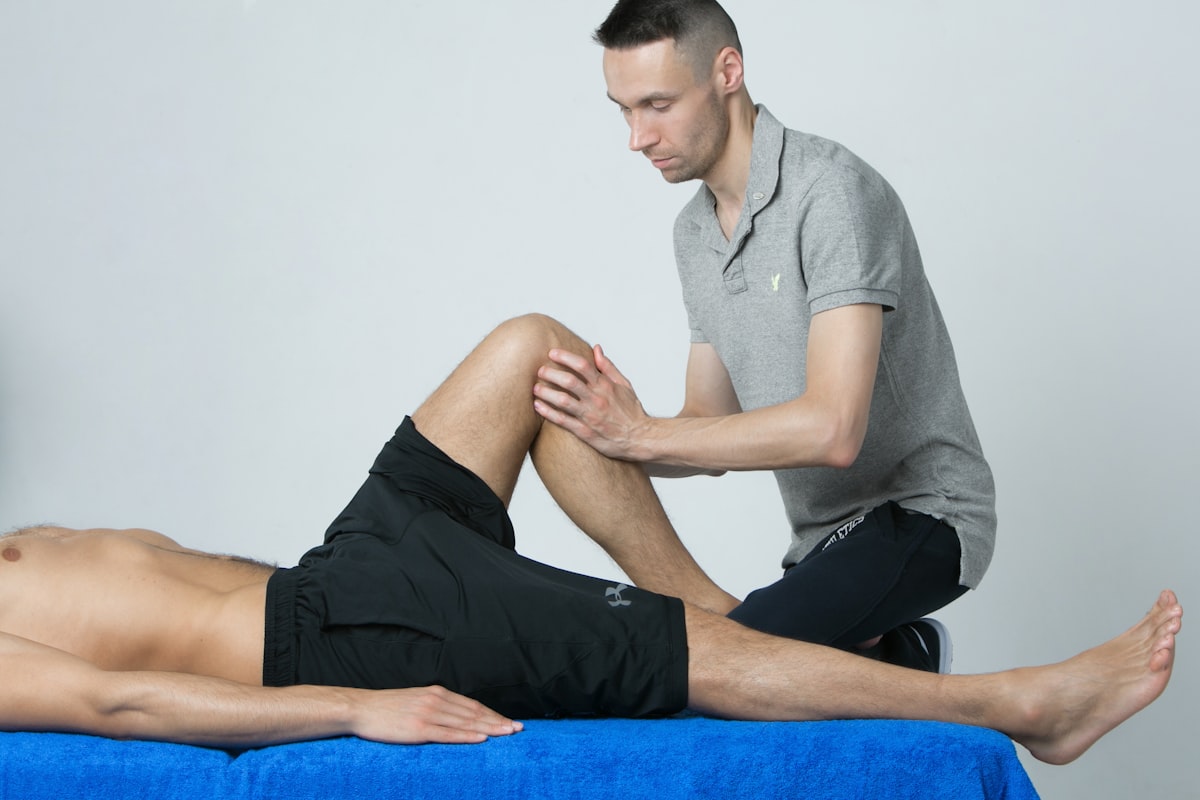
Why Mobility Recovery Matters
Faster functional improvement with structured rehabilitation versus passive recovery alone
Typical timeline to notice measurable gains in joint mobility and muscle strength
Our exercises follow kinesiotherapy and movement biomechanics research standards
Each recovery plan adapts to your injury type, fitness level, and lifestyle needs
Core Recovery Pillars
Therapeutic Exercises
Targeted movement routines designed to restore joint mobility, strengthen supporting muscles, and rebuild neuromuscular coordination after injury or surgery.
Movement Guidance
Expert-led insights into safe movement mechanics, proper posture alignment, and progressive activity progression to prevent re-injury and optimize healing.
Personalized Planning
Individual assessment and custom recovery programs that account for your specific condition, goals, and capacity for safe progression.

Why Our Approach Works
Recovery after injury or surgery requires more than passive waiting. Our platform brings together evidence-based therapeutic exercises, movement science principles, and personalized guidance to help you safely restore mobility and function.
- Evidence-Based: All exercises and methods follow kinesiotherapy and rehabilitation science standards.
- Expert Guidance: Content developed with qualified specialists in physical therapy and movement biomechanics.
- Individually Tailored: Exercises adapt to your injury type, recovery stage, and personal goals.
- Safe Progression: Clear guidance on how to advance movement intensity while protecting healing tissues.
- Comprehensive Support: From initial assessment through full return to activity, we guide each stage of your recovery.
Your Recovery Journey: Key Stages
Assessment & Professional Consultation
Begin with evaluation of your injury type, current mobility status, and pain levels. Coordinate with your healthcare provider to understand your specific restrictions and goals. This foundation ensures your recovery plan is safe and appropriate for your condition.
Gentle Mobility Work & Pain Management
Focus on reducing inflammation, relieving muscle tension, and restoring basic joint range of motion through gentle, guided movements. Learn tension relief techniques and understand proper posture during daily activities to prevent secondary injuries.
Strengthening & Core Development
Gradually increase resistance in therapeutic exercises to rebuild muscle tone and stability. Core strengthening becomes essential for supporting the injured area and restoring balance and coordination in movement patterns.
Functional Movement & Daily Activity
Progress to movements that mirror your everyday activities—walking, reaching, lifting, sitting. Work on movement biomechanics specific to your lifestyle needs. Build endurance and confidence in performing real-world tasks safely.
Maintenance & Prevention Strategy
Establish a sustainable exercise routine to maintain gains and prevent future injury. Learn about proper movement patterns, ongoing strengthening, and lifestyle adaptations that support long-term mobility and well-being.
Evidence-Based Mobility Exercises
Passive & Active Stretching
Guided flexibility work that gradually expands your range of motion. Stretching helps reduce tension, improves joint mobility, and prepares muscles for strengthening phases.
Learn MoreStrength & Endurance Training
Progressive resistance exercises build muscle tone, restore stability, and increase functional capacity. Tailored to support healing tissues without causing re-injury.
Learn MoreBalance & Coordination Work
Exercises that restore proprioception, improve stability, and prevent fall risk. Essential for functional recovery and safe return to daily activities.
Learn MoreMovement Biomechanics Education
Learn how your body moves efficiently and safely. Understanding proper movement patterns prevents compensatory injuries and speeds overall recovery.
Learn MorePain & Tension Relief
Techniques to reduce muscle spasms, release tension, and improve comfort during the healing process. Discomfort reduction supports motivation and faster progress.
Learn MoreInjury Prevention Strategy
Build resilience through targeted exercises and lifestyle adaptation. Learn how to maintain gains and protect yourself from recurring or secondary injuries.
Learn MoreCommon Questions About Recovery
The timing depends on your specific procedure and your surgeon's guidance. Early gentle mobility work often begins within days of surgery, while more intensive exercises typically start in weeks 2–6. Always consult your healthcare provider before beginning any exercise program. Our content helps you understand each recovery stage and how to progress safely.
Our exercises are categorized by injury type and recovery stage. Read the safety notes and precautions before any activity. Pain that goes beyond mild discomfort is a signal to stop and consult your doctor. We emphasize working with qualified specialists during assessment phases to ensure your personal plan is appropriate for your specific situation.
Mild discomfort during gentle movement is common, but sharp pain or increased inflammation is not. Follow the "no pain, no progress" principle carefully: gentle work should not cause lasting pain. If pain increases, reduce intensity and consult your healthcare provider. Our articles explain the difference between therapeutic discomfort and warning signs.
Recovery timelines vary widely based on injury severity, age, overall health, and adherence to rehabilitation. Minor injuries may improve in 4–8 weeks, while major surgery may require 3–6 months or longer. Our staged approach helps you understand what to expect at each phase, but your healthcare team provides the most accurate timeline for your specific condition.
Many exercises can be performed safely at home once you understand proper technique. However, initial assessment by a qualified specialist—physical therapist or kinesiotherapist—is valuable to ensure your personalized plan is appropriate. Our content complements professional guidance; it does not replace it. We recommend professional consultation, especially in early recovery phases.
Kinesiotherapy uses therapeutic movement and exercise to restore function after injury. Physical therapy is a broader field that includes kinesiotherapy along with other modalities like manual therapy, electrotherapy, and manual lymphatic drainage. Both are evidence-based approaches to rehabilitation. Our content focuses on the exercise and movement science components that support your recovery journey.
Success Stories from Our Community
"After my knee surgery, I felt lost about how to move safely. The systematic approach here—from gentle mobility to strengthening to functional exercises—gave me clarity and confidence. After some time, I was walking without pain and climbing stairs again. The movement biomechanics explanations helped me understand why each exercise mattered."
Margaret Thompson
Manchester, United Kingdom
"Six months post-surgery, I was stuck with poor mobility and chronic tension. The evidence-based exercises here, combined with the pain relief techniques, made a real difference. The personalized progression meant I wasn't overdoing it or under-challenging myself. I finally feel like I'm truly recovering, not just waiting."
David Chen
London, United Kingdom
"The comprehensive approach here helped me understand my shoulder injury recovery step by step. What I appreciated most was the emphasis on working with qualified specialists while having reliable, science-based information at home. The balance and coordination work restored my confidence, and the prevention strategies mean I'm unlikely to re-injure myself."
Catherine Wright
Edinburgh, United Kingdom
"After a serious ankle fracture, I needed structured guidance to rebuild from scratch. The 5-stage recovery journey made sense—I knew what to expect and when to progress. The stretching and strengthening exercises, tailored to my injury, meant I regained full mobility in under four months. The prevention section ensures I'll stay healthy long-term."
James Robertson
Glasgow, United Kingdom
Start Your Recovery Journey Today
Access evidence-based mobility guidance, therapeutic exercises, and personalized recovery strategies. Whether you're days post-surgery or months into recovery, find the structured support you need to safely restore movement and rebuild confidence.